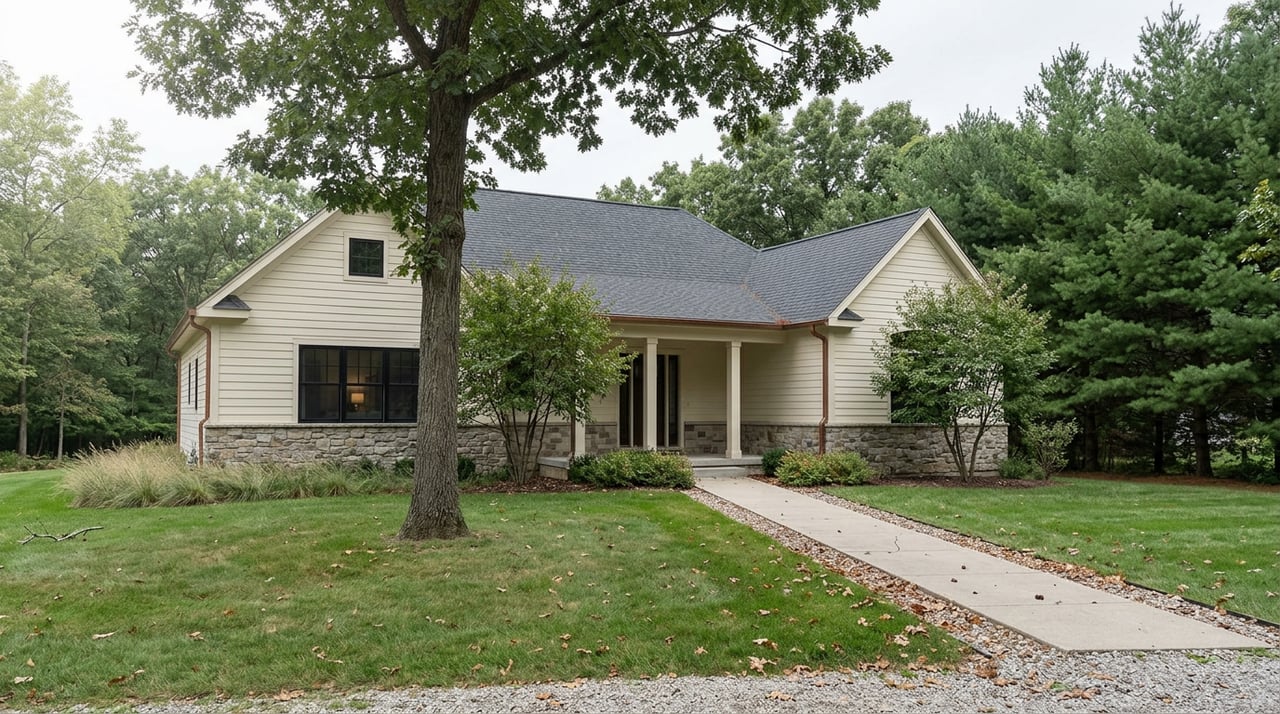
A listing for 15 acres on a paved country road outside Williamston reads like a postcard. Mature hardwoods, a pond, sunset views over open fields, a neighbor to the golf course. What it does not put in bold type is the sentence buried lower on the page: property requires a well and septic system. That single line changes the closing timeline for the buyer more than the acreage, the pond, or the view ever will.
Williamston's real estate identity runs on two different plumbing systems, and most people shopping the area do not realize which one applies to the house they are touring until an inspector is already standing in the yard.
Two Williamstons, One Zip Code
The City of Williamston itself runs its own municipal water and sewer utility. It serves a population of roughly 3,850 through a treatment plant and five well pump stations, and the sanitary collection system covers essentially all current city residents plus portions of Williamstown and Wheatfield Townships that fall under 425 service agreements. If a home sits inside that footprint, water and wastewater are a monthly utility bill, not a transaction condition.
Step outside that footprint, into the townships that surround the city and give Williamston its rural character, and the plumbing story flips entirely. Scroll through current land listings around Williamston and the pattern repeats on parcel after parcel: a Hideaway Subdivision building site near Williamston Public Schools calling for a "Conventional Septic System & Well," a 1.22-acre walkout site inside a 140-acre development bordering Oak Lane Golf Course that connects to a private community septic system for a one-time fee near $290, a 3.17-acre lot in the Wind-N-Wood subdivision that will "require a well & septic" before anyone can build. These are not fringe cases. They are the acreage estates, hobby farms, and larger-lot subdivisions that make Williamston distinct from denser, fully sewered neighborhoods closer to Lansing.
That distinction is the whole appeal for a certain kind of buyer. It is also where the transaction gets a second gatekeeper the buyer touring an East Lansing bungalow never has to think about.
The County Steps In Before the Deed Does
Ingham County has run a Point of Sale program for well and septic systems since it was adopted by the Board of Commissioners in 2006. The rule is straightforward on paper: before a residential property with a private well or septic system changes hands, that system has to be inspected and evaluated, and either certified as functioning or brought into compliance. Private certified inspectors or the county itself can do the work, but either way the inspection happens before closing, not after.
Ingham County is stricter on one point than some of its neighbors. Along with Shiawassee County, its sanitary code requires arsenic testing of well water in addition to the standard coliform bacteria and nitrate tests every point of sale system gets. That is a specific, named requirement tied to these two counties, not a generic septic disclaimer.
The county's own inspector reference sheet, last revised in October 2025, lists the professionals certified to do this work: Michigan Septic Inspections and Michigan Well & Septic Inspections, both based in Mason, Durrant Inspection Services in Portland, Johnson Inspection Service in Vermontville, and Tomak Consulting in Lansing, among others. A seller does not have to guess who is qualified to sign off on their system. The list already exists.
Why the Timeline Is the Real Story
Here is where the math starts to matter more than the acreage price per foot.
Once a private inspector submits the completed report to Ingham County Environmental Health, the county has 5 business days to issue its decision. That clock only starts after the report is complete.
Now compare that to how fast Williamston homes are actually moving. Over the three months ending May 2026, homes in Williamston sold after a median of 20 days on market, down from 47 days over the same period a year earlier. A market that used to give sellers and buyers nearly seven weeks of breathing room between listing and offer now compresses that window to under three.
What This Looks Like in Practice
A few specifics worth knowing before an offer goes in on anything outside city limits:
- Systems installed and finaled within the last two years are exempt from a new Point of Sale inspection, which matters on newer builds in developments like Nottingham or on recent Giguere Homes construction.
- Utilities need to be fully on, with running water at every faucet and the ability to flush toilets, before an inspector will even schedule a visit. A vacant or winterized property adds time most buyers do not budget for.
- County fees are separate from whatever a private inspector charges, and they vary by county, so a Williamston-area parcel that straddles a township line can carry different costs than one squarely inside Ingham.
- If a system fails, resolving the non-compliance can affect the transfer timeline. That is another reason to start the process early.
None of this makes acreage in Williamston a harder buy. Land here still runs an average of roughly $45,425 per acre based on current listings, and the average home value in Williamston has climbed to $314,736, up 2.5 percent over the past year. What it means is that the closing date on a well and septic property deserves its own conversation the day an offer is drafted, not the week before the walkthrough.
The Practical Takeaway
If the property you are buying or selling sits inside Williamston's city limits, the water and sewer story is simple and it is someone else's utility to maintain. If it sits in the surrounding township land that gives Williamston its acreage and its equestrian estates, build the county's timeline into your offer from the start. Ask early whether the current owner has ever had the system inspected, ask for maintenance and pumping records, and get a private inspector scheduled the same week the property goes under contract rather than waiting for a due diligence deadline to force the issue.
Frequently Asked Questions
Does every Williamston-area property need a Point of Sale inspection? Only properties on private well and septic systems outside the city's municipal service area. Homes inside Williamston's water and sewer footprint, and townships covered by a 425 service agreement, are not subject to this county requirement.
Who pays for the inspection? That is a negotiated point between buyer and seller, though sellers commonly schedule and pay for it since it is their system being certified for transfer.
What if the well or septic system fails inspection? A failed system can affect the transfer timeline, which is another reason to start the process early rather than late.
If you are weighing a Williamston property on a well and septic system, or comparing it against a fully sewered lot in Okemos or East Lansing, The Whybrew Project can walk through what that timeline actually looks like for your specific parcel. Schedule Appointment to talk through the details before you write the offer.
This article is general information, not legal, tax or financial advice. Consult a qualified professional about your situation.