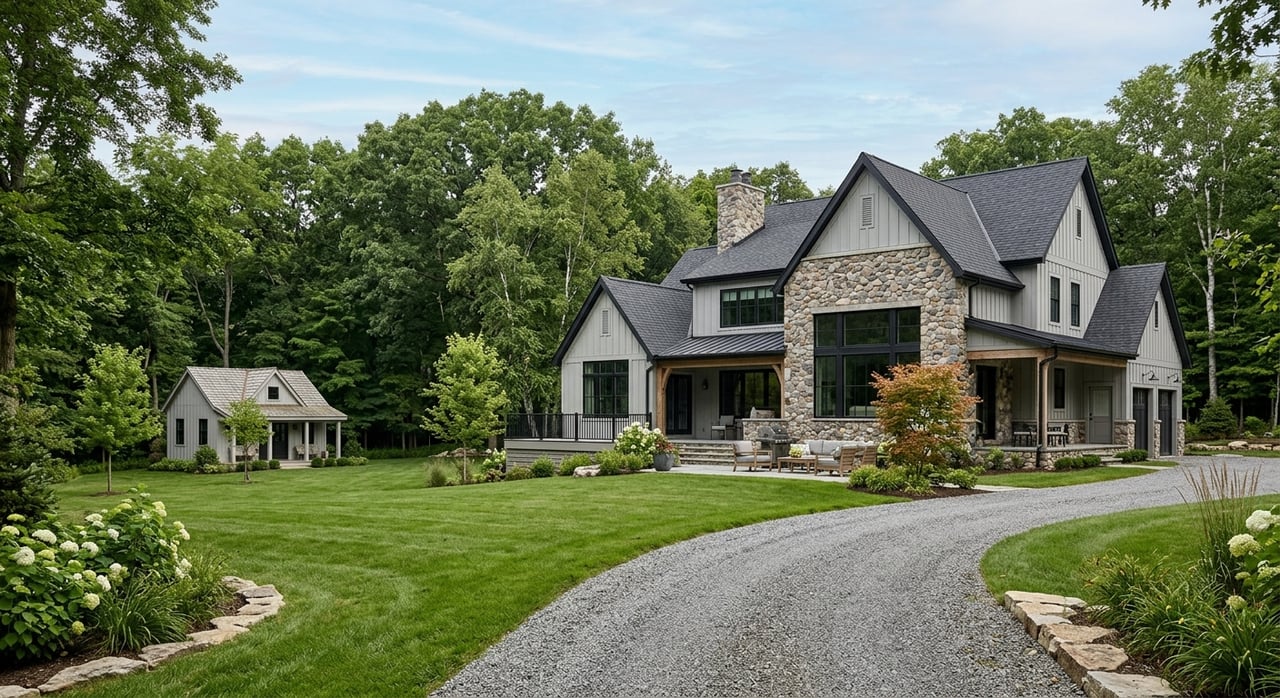
If you are dreaming about more space near Williamston, it is easy to fall in love with a listing before you know what that land can actually do. A bigger lot can offer privacy, room to spread out, and flexibility that a standard neighborhood property may not. But around Williamston, lot size, zoning, utilities, and road access can change what is possible in a big way. Here is what you should know before you write an offer. Let’s dive in.
Larger Lots Mean Different Things Here
In and around Williamston, a “larger lot” is not one single property type. Some homes sit on conventional city lots, while others are on semi-rural parcels or full acreage with very different rules.
Inside the City of Williamston, the R-1 single-family districts have minimum lot sizes of 8,000 square feet in R-1C and 9,600 square feet in R-1S. The city’s RR district requires 2 acres, and the A-R agricultural-residential district allows one-family homes and agricultural use, with agriculture and farm uses limited to tracts of at least 3 acres. That is a major shift from a typical subdivision setting.
In Williamstown Township, the scale becomes even more rural. The RR district requires 90,000 square feet, the RE district requires 5 acres, the AG-SF district requires 10 acres, and the AG-C district has a 40-acre minimum lot area in the district summary. The township’s stated goal is to retain natural features, prime farmlands, and open space while allowing limited low-density development.
Zoning Should Lead Your Search
When you are shopping for land or a larger lot, parcel size is only part of the picture. The more important question is whether the property’s zoning matches how you want to use it.
Local ordinances do not use “hobby farm” as a formal zoning category. Instead, they regulate specific uses such as farms, agricultural operations, gardening, household animals or pets, barns, stables, roadside stands, accessory dwelling units, home occupations, and in some districts uses like kennels, nurseries, veterinary clinics, pet boarding, outdoor storage, and agricultural tourism.
That means two parcels with similar acreage may offer very different options. If you want space for animals, a barn, a garden, or an outbuilding, you need to confirm that the exact use is allowed in that district and whether there are acreage thresholds attached.
City and Township Rules Are Not the Same
A common mistake is assuming that all larger lots near Williamston function the same way. They do not. City and township ordinances are written with different priorities, and those priorities affect your options.
In Williamstown Township, rural districts are designed to preserve low-density living and continued agricultural use. The township also notes in RR and RE that public water and sewer services are not likely to be provided, and AG-C is specifically meant to discourage urban and suburban services from spreading into agricultural portions of the township.
Even inside the City of Williamston, a rural district does not automatically become suburban just because utilities may exist nearby. The city ordinance says that water and sewer availability alone may not justify higher-density zoning in the RR district. So if you are hoping a large parcel can someday function like a subdivision lot, that assumption needs to be checked carefully.
Utilities Can Shape Your Plans
Utilities are one of the biggest practical differences between a standard home site and acreage. They affect cost, maintenance, timing, and whether a parcel works for your plans at all.
Inside the City of Williamston, the city provides potable water and sanitary sewer service to city residents and also to some parcels in Williamstown and Wheatfield Townships through 425 service agreements. That can simplify things for some properties, but it is not the norm for every larger lot in the area.
For many acreage properties, private systems are part of the package. Ingham County Environmental Health performs land evaluations for on-site sewage treatment and water supply systems and inspects and approves on-site sewage and water-well systems before a transfer of home ownership can occur. If a parcel relies on private well and septic, you will want to understand that early.
A Split Parcel Is Not Always Buildable
This point surprises many buyers. Just because land can be divided does not mean every resulting parcel will qualify for a future home.
Williamstown Township’s land-division ordinance says each resulting parcel must have the required frontage on a public road or approved private road or easement. It also states that approval of a land division is not a guarantee that a building permit will be issued later if water supply or sewage disposal is inadequate.
That is why buildability should never be assumed. A parcel may look attractive on paper and still present issues once access, septic suitability, or water supply are reviewed.
Road Access Matters More Than Many Buyers Expect
A long driveway and quiet setting can sound ideal, but access comes with responsibilities. On larger lots, road type and driveway approval can affect both convenience and cost.
The Ingham County Road Department requires a permit for a driveway approach to an Ingham County road. The current application shows a $250 fee for residential driveways and $250 for field-access drives, and it states that no work may be done in the right-of-way before permit issuance.
Private roads bring another layer. Williamstown Township’s private-road ordinance says private roads must meet standards for safe year-round access, maintenance is the sole responsibility of the private-road owners or easement holders, and buyers must be notified when a parcel fronts on or is served by a private road.
Public Road vs. Private Road
This is worth clarifying before you fall too far in love with a property.
| Access type | What to confirm |
|---|---|
| Public road | Frontage, driveway permit needs, and road-approach requirements |
| Private road | Easement terms, maintenance responsibility, year-round access standards, and buyer notification details |
A beautiful setting can feel very different once you understand who handles maintenance and what access rules apply.
The Lifestyle Tradeoff Is Real
There is a reason buyers are drawn to larger lots around Williamston. More space can mean more privacy, room for gardens, outbuildings, or barns, and in some districts the option for animals or limited agricultural use.
At the same time, these properties are often more site-specific than a standard subdivision home. Private-road upkeep, well and septic maintenance, larger setbacks, and zoning limits on future uses can all shape your day-to-day experience.
That same complexity can affect resale too. In general, standard subdivision lots often offer simpler utilities, easier access, and a more predictable resale path, while larger lots trade some of that simplicity for space and flexibility.
What To Check Before You Write an Offer
If you are serious about land or a larger lot near Williamston, a little upfront homework can save you from a costly surprise later. These are the details worth confirming right away.
Your Pre-Offer Checklist
- Confirm the exact zoning district on the official map
- Verify whether your intended use fits that zoning district
- Ask whether the parcel has city water and sewer or private well and septic
- Confirm whether the road is public or private
- Request any existing septic, well, survey, easement, or land-division paperwork
- Check whether frontage meets local requirements for the parcel and any future split plans
This is where attractive and usable become two different things. The right property is not just the one that looks good online. It is the one that supports your actual goals.
Why Local Guidance Helps
Land and larger-lot purchases usually come with more moving parts than a typical home purchase. You may be evaluating zoning language, utility questions, road access, and future use all at the same time.
That is why it helps to work with a team that understands Greater Lansing area property types beyond the typical subdivision search. Whether you are looking for room to build, space to spread out, or a property with long-term flexibility, clear local guidance can help you ask better questions before you commit.
If you are considering land or a larger lot near Williamston, The Whybrew Project can help you sort through the practical details and find a property that fits the way you want to live.
FAQs
What counts as a larger lot in Williamston, Michigan?
- In Williamston, larger lots can range from city parcels larger than standard R-1 lots to 2-acre RR parcels in the city and much larger rural parcels in Williamstown Township, where minimums can reach 5, 10, or even 40 acres depending on zoning.
Can you have a hobby farm on land near Williamston?
- Local ordinances do not use “hobby farm” as a formal zoning term, so you need to verify whether your specific planned uses, such as animals, barns, gardening, or agricultural activity, are allowed in the property’s zoning district.
Do larger lots near Williamston usually have public water and sewer?
- Not always. The City of Williamston provides water and sewer to city residents and some nearby parcels through service agreements, but many acreage properties rely on private well and septic systems.
Is a divided parcel near Williamston automatically buildable?
- No. Williamstown Township states that land-division approval does not guarantee a future building permit if water supply or sewage disposal is inadequate.
What should you ask before buying land near Williamston?
- You should confirm zoning, intended use, utility type, road type, frontage, and any available survey, easement, septic, well, or land-division documents before writing an offer.